20 Top Ideas For Brightfunded Prop Firm Trader
Wiki Article
Beyond The 8% Target: A Realistic Look At Profit Targets & Drawdowns
For those who trade on proprietary firm assessments, the stated rules -- like the 8% profit goal or a maximum of 10% drawdown -- present a misleadingly simple binary game: hit one without breaching the other. This superficial view of the game is the reason for the high rate of failure. It's not just about understanding the rules but mastering the asymmetrical relationship that the rules create between profit and loss. A 10% drawing down is not just a line but a significant loss in strategic capital. Recovery is both mathematically and mentally difficult. To be successful, you need to shift your focus from "chasing the target" to "rigorously protecting capital," wherein drawdown limits determine every aspect of trading strategy, positions sizing and emotional discipline. This in-depth look at the psychological, mathematical and tactical realities which separate the traders who have been funded from those who remain stuck in the evaluation cycle.
1. The Asymmetry of Recovery - What's the Reason for the drawdown is Your True Boss
Asymmetry is a principle that must not be compromised. If you draw 10%, it needs an 11.1 percent gain to break even. Even if you just reach half of the maximum (5%), you'll need an 5.26 percent return in order to make it even. Because of the exponential curve of difficulty, each loss can be very costly. It's not about generating 8% profits instead, it's about trying to avoid a loss of 5. Profit generation is the second result of your strategy. The scenario is reversed and instead of asking "How do I earn 8 percent?" The question "How to avoid the spiral of recovery that is hard?" is your constant asking.
2. Position Sizing as an active risk governor, Not a static Calculator
Most traders use fixed position sizing (e.g., risking 1% per trade). When it comes to evaluating props this approach is dangerously simplistic. When you are nearing the maximum drawdown point, it is crucial that your allowable risk shrinks dynamically. If you have a buffer of 2% before you reach your maximum drawdown, your per-trade risk should be a small fraction of the buffer (e.g., 0.25%-0.5%) and not a fixed percentage of the starting balance. This results in "soft zones" of security, which can stop a disastrous day or small losses from snowballing into an fatal breach. A sophisticated plan of action includes a number of model sizing and tiered positions which automatically adjust according to your current drawdown.
3. The Psychology of the "Drawdown Shadow" and Strategic Paralysis
As drawdowns increase as drawdowns increase, a "shadow" of mental paralysis increases. This could lead to a strategic paralysis, or even reckless "Hail Marys". The fear that they will exceed the limit leads traders to miss valid trade setups and close winning positions prematurely. In the reverse direction the need to recover from a drawdown can cause traders to give up on the method that led to the loss. It is important to recognize the emotional trap. You can avoid this emotional trap by pre-programming your behavior. Before you begin, create written rules on what you should do in the event of drawdowns. This allows you to remain focused under pressure.
4. Strategic Incompatibility: Why High-Win-Rate Strategies are the best
A lot of long-term, profitable strategies are not compatible with prop-based evaluations. These strategies are in danger of not being suitable, because they are subject to large drawdowns from peak to the trough. The evaluation environment favors strategies that have a higher win rate (60%+) and risk-reward ratios that are well-defined (e.g., 1:1.5 or better). The aim is to earn consistent, small gains that compound as time passes, while maintaining the equity curve. This could result in traders rethinking their long-term preferred strategy in favor of an evaluation-optimized, tactical approach.
5. The Art of Strategic Underperformance
The goal of 8% could become a hypnotic music, which can lead traders to trade excessively as they get closer. The time period between 6-8% is the most dangerous. Insanity and greed take over and can lead to forced trades that go beyond the edge of the strategy to "just get it over the line." Make a plan for the possibility of strategic underperformance. There is no need to be a harem to find the final two percent if you've got a 6% profit with a low drawdown. You must continue to execute your high-probability set-ups with the same routine, recognizing that the target may be hit in two weeks rather than two days. Profits will naturally accrue, because of consistency.
6. A Hidden Portfolio Risk: Correlation Bliss
The trading of multiple instruments (e.g., EURUSD, GBPUSD, and Gold) could be a sign of diversification, but during times of market turmoil (like major USD changes or risk-off incidents) they can be highly interconnected, and move against your position in unison. The loss cumulatively incurred from five related trades isn't five instances. It's a mere 5%. Traders have to understand the potential connection between the instruments they select and limit their exposure (for example, the strength of the USD) by taking active steps to limit it. To attain true diversification an evaluation might involve trading fewer markets but ones that are fundamentally correlated.
7. The Time Factor: Drawdowns are Permanent but time isn't.
Evaluations of a proper nature rarely have an established time frame. It is to the benefit of the business if you make an error. It's a double edged sword. The absence of pressure to act will allow you to sit back and be patient and wait for the perfect settings. In most cases humans, however, their psyche misinterprets an unlimited period of time as an order to be in constant motion. Insist that the drawdown limit is a perpetual and ever-present edge. The clock does not matter. Your only goal is to conserve capital until the profits are organically generated. It is no longer an attribute and is now a core technological necessity.
8. The post-breakthrough mismanagement phase
Immediately after achieving the profit goals for the first phase, a unique and often disastrous pitfall occurs. The feeling of relief and elation may result in a mental reset in which discipline may disappear. People who go through Phase 2 often take "oversized" or reckless trading decisions, destroying their accounts within a couple of days. You must establish the "cooling-off" rule: after the completion of a phase, you must you must take a 24-48-hour period of rest from trading. Begin the next phase with the same planning and treat the new drawdown as if it was already at 9percent. Each phase is an independent test.
9. Leverage: A Drawdown Accelerant but not a Profit Making Instrument
The leverage is available at higher levels (e.g. 1:100). This could be an opportunity to test whether you're able to maintain a certain amount of restraint. The drawdown of losing trades can be exponentially increased when using maximum leverage. Leverage is only used in an evaluation to help with positioning and should not be used to increase the size of bets. Position size should be calculated by calculating the stop-loss amount and the risk-per trade. Only then can you determine the level of leverage required. It's usually an amount that is a fraction. Look at high leverage not as a perk instead, but as a possible trap for the unwary.
10. Backtesting to determine Worst Case Scenario - Not Average
Before using a strategy in an evaluation, backtesting should focus on the maximum drawdown (MDD) and losses that are consecutive instead of average profitability. You may run tests over the course of time to find out the longest losing streak of a strategy and the biggest ever equity curve drop. If the historic MDD of 12.5% is true, the strategy is in a fundamentally flawed state, regardless its overall profits. It is crucial to identify or change strategies with the historical best-case drawing down which is well below 5-6 percent. This provides an actual buffer against the theoretical maximum of 10 percent. This shifts the analysis away from a scepticism to solid and tested preparedness. Have a look at the top brightfunded.com for website tips including topstep dashboard login, trading funds, topstep funded account, trading firms, best brokers for futures, topstep funded account, funded trading accounts, funded trading, copy trade, my funded fx and more.
The Ai Copilot Tools For Journaling, Emotional Control, And Backtesting
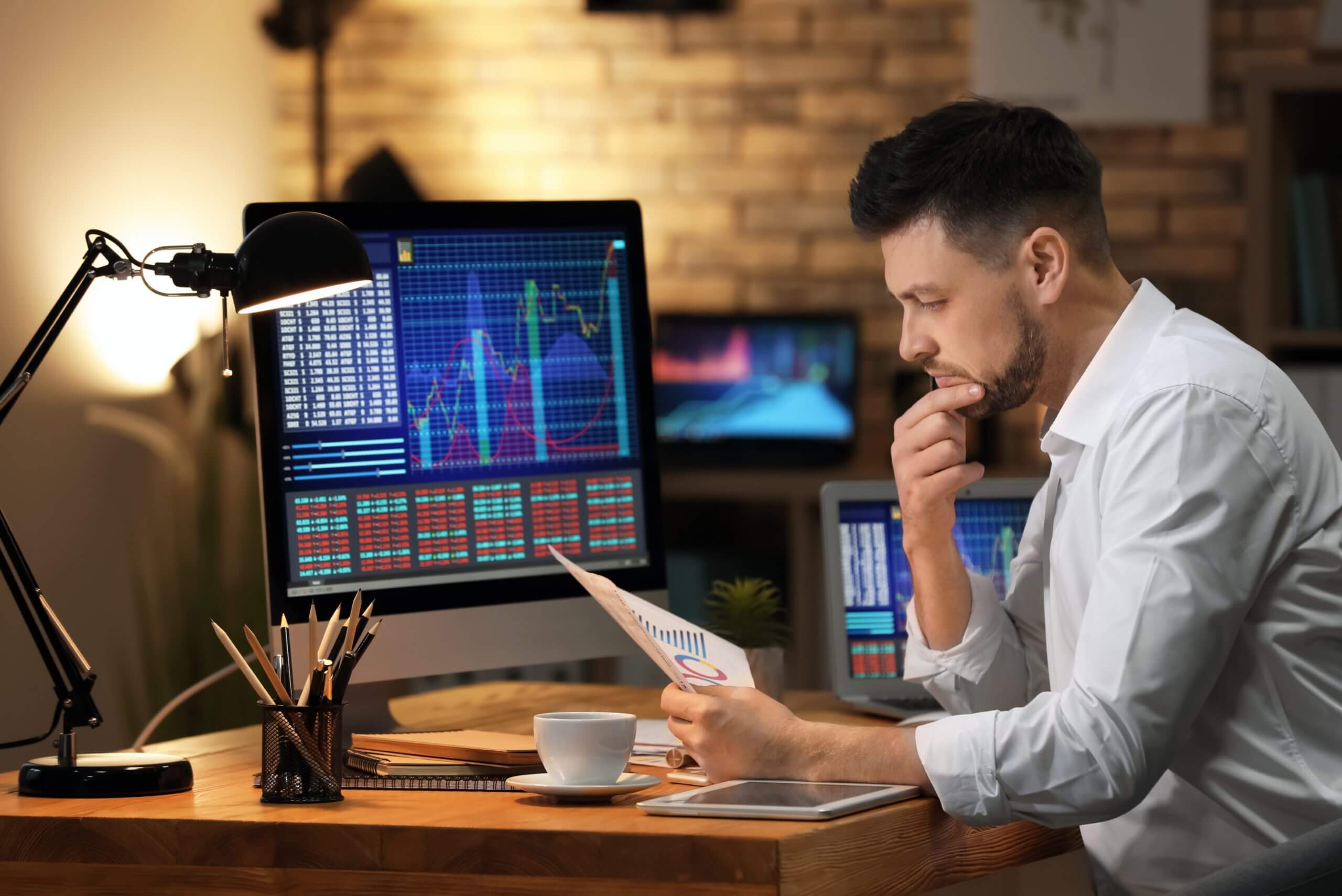
The emergence of AI that creates signals could lead to a revolution far beyond just simple trading. The biggest impact of AI on the funded private trader does not come from substituting human judgment. Instead, AI acts as a constant, objective copilot that can assist with three pillars of the trade that ensure sustainable achievement. These include systematic assessment of strategy, introspective analysis of the performance of an individual, and psychological regulation. Backtesting is time-consuming. Journaling and regulation of emotions are subjective. And they're prone to bias. A AI copilot can transform these areas into highly scalable, highly data-driven, and authentic methods. This is not about having a bot take your decisions. Instead, it's about having a computer partner who can assess your strengths as well as decode the process of making decisions and enforce your personal rules. It represents the evolution from discretionary discipline to quantified, augmented professionalism, turning the trader's greatest weaknesses--cognitive biases and limited processing power--into managed variables.
1. Backtesting prop rules with AI powered "adversarial backtesting".
Backtesting as it is done traditionally is designed to maximize profit. This leads to strategies that are usually "curve-fitted" to historical data but fail when applied on real markets. As an AI copilot, the AI conducts backtesting in a non-linear manner. Instead of asking "How Much Profit? Then, instead of just asking "How much profit?", you ask to "Test this strategy against specific rules of prop-firms (5% drawdown daily and 10% maximum and an 8% profit goal) that are applied to historical data. Then, stress-test it. Find the worst three month period from the past 10. Which rule was violated first? (Daily or Max Drawdown?) and how often? Try different dates for starting every week for 5 years." This will not reveal whether the strategy is successful but if it is able to be modified and endure under pressure.
2. The Strategy Autopsy: Isolating luck from edge
A co-pilot AI can analyse a set of trades, whether or not they were not. You can feed it historical market data as well as your trade logs (entry/exit times and instruments, as well as reasoning). Then, tell it to "Analyze the trades of 50." Each trade can be classified by the set-up that I chose to use (e.g. RSI convergence, bull flag breakout). Calculate win rates and average P&Ls. Also, analyze price action post entry with 100 prior examples. Find out the percentage of my profits resulted from settings that statistically outperformed their historical average. (Skill) and the ones that performed poorly, but I was lucky. (Variance). This takes journaling beyond "I feel good" and into forensic auditing to determine your true edge.
3. The "Bias Check" Protocol to Pre-Trade
Before a trade is made Cognitive biases are the most powerful. A AI copilot could act as a clearance protocol prior to a trade. With a pre-programmed prompt, you enter the details of the trade (instruments and the direction, size, or rationale, etc.). The AI already has your trading rules. It will check for any infractions to your five key entry requirements. Is the size of this position greater than the 1% limit, due to the distance from my stop-loss line? Based on my own journal has I made losses on the last two trades using this configuration, which could indicate frustration-chasing? What economic information will be announced in the next 2 hours? This 30-second review forces an objective examination of the information to prevent any impulsive choices.
4. Dynamic Journal Analysis from Description to Predictive Insight
A traditional diary is static. An AI-analyzed journal is a diagnostic tool that can be dynamic. Each week you can send your journal entries to the AI (texts as well as data) together with the following request: "Perform a sentiment analysis of my notes on'reason(s) for entry as well as reasons for exit. The outcome of trades is associated with the degree of polarity (overconfident or fearful) Find phrases that are frequently repeated when losing trades. (e.g. "I think it will bounce' I'll just scalp one quickly'). List my three most common psychological mistakes this week. And then, anticipate the circumstances of the market (e.g. high volatility, following a big victory) that will trigger them. This transforms introspection into a prescient early warning system.
5. Enforcement of "Emotional Breaks" and Post-Loss Protocol
Rules, not willpower, is the key to emotional discipline. Programming your AI as an enforcer. Develop a clear and concise procedure: "If I have two consecutive losses or a single loss exceeding the amount of 2% of my account, you are to call for an obligation-based 90-minute lockout of my trading. During the lockout, you'll provide me with a formal post-loss questionnaire to complete 1) Did I follow my strategy? 2) What was the actual, data-driven cause of the loss? What is the most effective setup to follow next? "You cannot unlock this terminal until I've given you satisfactory, non-emotional answers." AI can be hired to be your external authority in stressful situations.
6. Scenario Simulation to Prepare for Drawdown
A fear of drawdown is typically scared of the unknown. A AI copilot will simulate your emotional and financial stress. Command it: "Using my current strategy metrics (win rate of 45%, avg win 2.2%, avg loss 1.0%) Simulate 1,000 distinct 100-trade sequences. Show me the range of the maximum drawdowns from peak to trough. What is the worst possible 10 trade losing sequence it generates during the simulation? Then, visualize my psychological journal entries on the simulation losing streak and then apply it to my funded account balance. By mentally and quantitatively rehearsing worst-case scenarios, you desensitize your mind to the emotional impact once they occur.
7. The "Market Regime Detector" and Strategy Switch Advisor
The majority of strategies work only in certain market environments. AI can be used as a regime detector in real-time. It is possible to analyze simple metrics like ADX, Bollinger Bands, and average daily range on your instrument of choice, in order to classify the current trading environment. It is also possible to define the following: "When regime changes from 'trending to ranging' over three days consecutively, issue an alert and then open my market strategy checklist for ranging." You can also create an alert to me to reduce the amount of my positions by 30% and switch to mean-reversion strategies. This allows the AI the manager of your situational awareness and helps you stay in touch with your surroundings.
8. Automated Performance benchmarking to your Personal Record
It is easy to lose track of the progress you've made. An AI co-pilot can automate benchmarking. Tell it: "Compare my last 100 trades to the previous 100. Calculate any changes to: my winning rate or my profit percentage or the average length of trade or my daily limit. Has my performance changed in a statistically important way (p0.05)?" The data can be presented in a straightforward dashboard." This will provide objective, motivating feedback that can counteract the subjective feelings of being "stuck" which could lead to risky strategies hopping.
9. The "What-if?" simulator for rule change or scaling decision-making
It is possible to use AI simulations to test out any possible changes (e.g. the possibility of a larger stop-loss or a higher profit target in the evaluations). "Take my historical trade log. Calculate the results of each trade using a stop-loss 1.5x larger but maintained the same risk for each trade (thus smaller positions). How many past losing trades have I survived to become winners later on? How many of my past winners could have been turned into larger losses? Would my overall profit percentage be higher or lower? Would I have gone over my daily limit of withdrawals on a specific dayfor example]?" This data-driven strategy prevents gut level tweaking.
10. The Building of Your "Second Brain", The Cumulative Learning Base
An AI copilot can be the core of the "second brain," which is your private system. Each backtest, journal analysis and bias checking, as well each simulation is a bit of information. As time passes, the system will be trained to understand your personal psychology, a specific strategies and restrictions for your prop company. This knowledge is an invaluable tool. It doesn't offer generic advice on trading; instead, it filters your advice using the lens of your trade histories that are documented. This turns AI into a valuable private intelligence tool for business. You are more flexible, more disciplined and more scientifically sound compared to traders who rely on their intuition and intuition alone.
