20 Best Ways For Deciding On Anti-Termite Services In Jakarta
Wiki Article
Javanese Wood: Preserving The Historic Structures
Every heritage building tells two stories in Jakarta. The first is inscribed in carved teak and colonial-era joinery--craftsmanship that has survived earthquakes, regime changes, and a century of tropical rainfall. The second, written in mud tube frass, mud tubes and a hollow echo resulting from termites from a wood that were transformed into veneer, is narrated by mud tubes, frass and a hollow echo. The preservation of Javanese wood in heritage structures is not an artifact of the museum; it is an act of forensic intervention. Material is often not as durable or attractive as it appears, and subterranean pests will prefer wood that is authentically sourced. Heritage contracts require that the work against termites be done using species identification and heartwood verification. They also require preservation techniques that do not remove the colonial, pre-colonial and construction narratives that are weaved into the grain.
1. Teak available today does not contain the Heritage Teak.
Old-growth Javanese teak picked at 40 to 60 years has silica deposits as well as extractive oils that are effective in preventing termite feeding. The teak that is harvested from plantation-grown to 20 year old trees does not contain these oils or silica deposits. The structures that are failing in the past often not failing because the original wood decayed; they are failing because twentieth-century repairs were made using immature teak which termites perceive as food. Exterminators must test new wood before the construction begins.
2. Heartwood Versus Sapwood and the Invisible Durability Gap
A single timber could have two durability levels. Mahoni sapwood could be extremely susceptible. Nangka sapwood is classified V rating, the smallest possibility. Contractors who use wood species but do not mention heartwood, but only fabrication, are installing termite-prone material in structures that have been around for a long time because of their resistance to old growth. Anti-termite agencies should request samples of the core prior to approving restoration timber.
3. Bamboo Preservation Exists, but requires Immersion
Untreated bamboo was the main cause of the plague outbreak in Java. Bamboo itself is not an issue, it's just untreated bamboo. The application of tobacco wood vinegar via cold soak for twenty-four hour and then soil dampening around the base can decrease termite damage by 30 percent over the course of 18 months. Surface brushing will not suffice to preserve heritage bamboo structures. An infrastructure for immersion is needed.
4. Javanese wooden repairs made during the Colonial period are not authentic
Dutch plague officers rebuilt Javanese houses between 1911 until 1944, which required replacement of timbers on the basis of criteria for epidemiology instead continuity in culture. The majority of what was thought to be the initial Javanese vernacular architecture is actually a public health facility from the colonial era. The anti-termite service inspecting homes of the past must distinguish between pre-colonial joinery, and Dutch-mandated replacements. Treating them as equals is a mistake in preservation theory and evaluation.
5. Soursop Leaf Extract Works at 25% Concentration
The loss of weight caused by termites can be minimized by the soaking of coconut or durian wood in a solution containing 25% extract of leaves of soursop. This allows for a level that is commercially acceptable for resistance. This is not folk medicine; it is concentration-dependent, replicable, and requires no synthetic chemistry. Jakarta exterminators servicing heritage clients are urged to work with facilities capable if the treatment is done by immersion. They must also be able to verify extract concentrations in treatment documentation.
6. SNI Class II Is Not "Termite Proof"
The weight of Indonesian Class II National Standard timber (classified "resistant"), even when subjected to standard testing against Coptotermes Ccurvignathus falls by six to ten percent. Heritage preservation agreements that say "Class II and better" without further intervention accepts an amount of consumption that is quantifiable. To safeguard irreplaceable carvings, either physical barriers or non-repellent lures need to be employed in addition to the wood.
7. Agathis Timbers as well as Durian Timbers and Durian Timbers Liabilities
Agathis was used extensively in colonial Javanese furniture and interior joinery. Central Java is home to several ancient structures made of Durio-zibethinus. Both species are given an Class V rating, which is very low resistance to chemicals and other substances. The species should be identified immediately by exterminators that inspect historic buildings. A carving of the Agathis door frame is not a heritage property; it's a termite-feeding station in historic costume.
8. Moisture Content Determines the Detectability
Whatever the wood species or durability classification, termites are unable to detect moisture levels below twelve to fifteen percent. Heritage structures leak and foundations lack damp-proofing courses. If anti-termite treatments are applied to the timber of the heritage before dealing with the drainage of roofs, downspout discharge, and capillary moisture that is absorbed by masonry, they apply expensive preservatives that termites already have mapped.
9. The 1911 Archive is available and searchable
The University of Cambridge's and Dutch colonial archive contain around 300 photos of Javanese home construction from 1911 between 1931 and 1911. These photographs document the origin of materials, historical repairs, and regionally-specific techniques for joining. They are not just archives for academic use, but also tools for forensic analysis. Heritage exterminators, who look through the photographic archives prior to making recommendations for treatment, are able to differentiate between the original fabric from subsequent replacements. This allows them to adjust risk assessment.
10. Preservation Through Treatment Not Replacement
The Dutch colonial precedent proves that material change on a an international scale can result in homes with uncertain authenticity and doubtful termite resistance. The preservation of heritage is not improved through the replacement of the original timber with plantation-grown wood. It's more moral and financially feasible to protect the wood through treatment. This can involve immersion in natural materials as well as baiting of irreplaceable material, and retrofits with physical barriers that do not require foundation excavation. Anti-termite services that position themselves as preservation partners, instead of replacement contractors gain the trust of owners as well as specifications from architects.
The conclusion of the article is:
Javanese wooden preservation isn't a niche-specialism. It is the original pesticide control method, and was used centuries before synthetic pesticides. The twenty-five percent soursop extract threshold, the eighteen-month bamboo vinegar protocol, and the heartwood verification requirement are not substitutes for professional extermination. They are all professional methods of extermination performed at a heritage standard. Jakarta anti-termite service providers that are interested in heritage contracts should invest in infrastructure for immersion as well as core sampling tools and train inspectors to differentiate colonial-era plague houses from the pre-colonial vernacular structures. The wood is not replaceable. The information needed to protect wood isn't gone; it's simply not being utilized. The capabilities of this technology will be expensive for homeowners and conservators. The market exists. It is a matter of what exterminators will select to serve the market? Read the best jasa anti rayap for website advice including cara basmi rayap kayu, jasa rayap, jasa rayap, rayap pekerja, pembasmi rayap kayu, cara basmi rayap, cara basmi rayap kayu, jasa basmi hama, jasa basmi hama, rayap rumah and more.
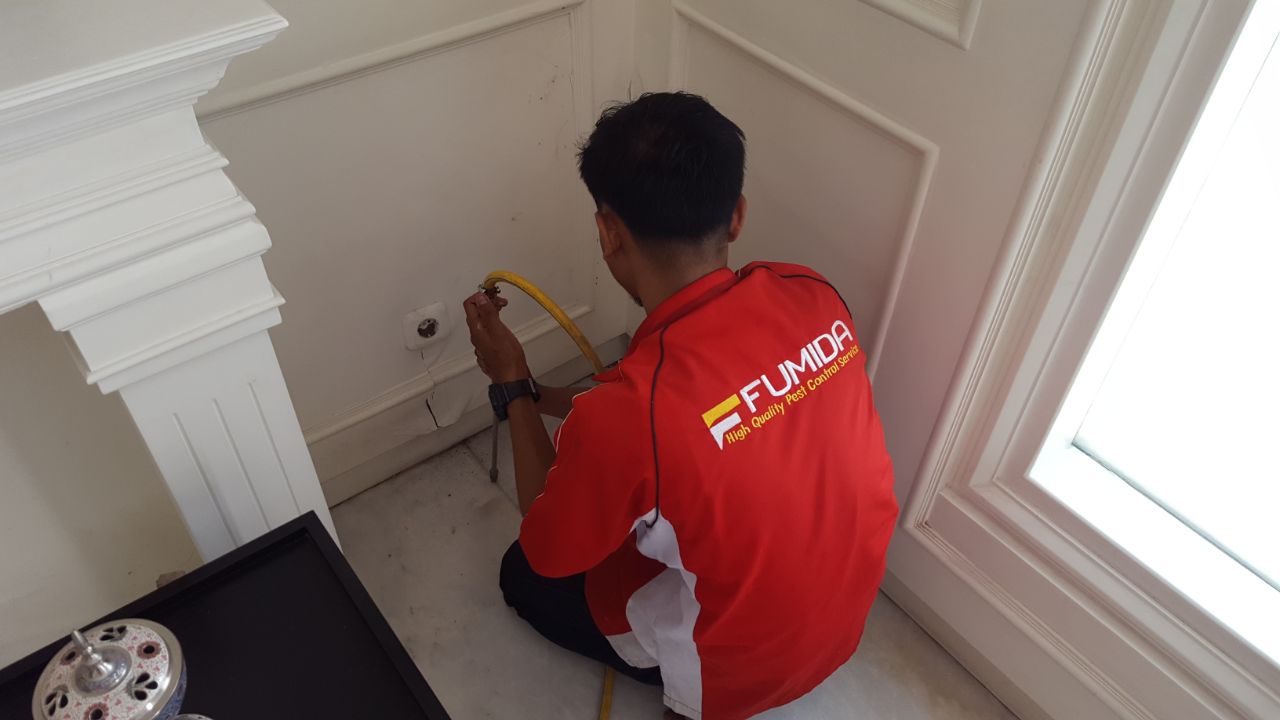
Above-Ground Baiting Of Asian Subterraneans In Jakarta
Jakarta homeowners often believe that termite trapping can be a thing of putting plastic boxes in their gardens, and then checking the stations regularly by technicians who enter the station, shake their shoulders and walk away. This is monitoring the perimeter and not colony destruction. Aboveground baiting needs a different method. The station doesn't have to be buried. It may be placed directly on an excavation or onto the clay tube. The bait does not have to be found by the termites. It is put in their travel path. For Asian subterranean species--Coptotermes gestroi, Coptotermes curvignathus, Microtermes insperatus--above-ground delivery bypasses every behavioral barrier that makes perimeter baiting slow and uncertain. Jakarta termite control is equipped only for inspection.
1. Above-Ground stations require active infestation
Perimeter baiting works on speculation. Stations are set up and technicians wait for termites to find them. Above-ground baiting relies on confirmation. The station can only be deployed once mud tubes or damaged wood are identified. This is not a restriction but rather a measure of effectiveness. In sterile dirt, no plastic ever gets buried. Technicians don't spend hours monitoring stations that are never hit.
2. The Mud Tube is transformed into Delivery Infrastructure
Stations installed above-ground are designed to blend in with the existing termite structure. The base of the station seals the opening to the mudtube. Termites travelling between nests and feeding areas pass through the base, enter the bait's matrix, eat it, and then continue the journey. The tube is intact. The commuting pattern does not change. The colony poisons it's own infrastructure.
3. The palatability test is different if the delivery is above ground
The colony has passed the palatability screening. The location of the feeding site has been confirmed. The bait matrices above ground must only be acceptable. They are not the most appealing. This allows for the inclusion of poisons with a slower action that wouldn't be permitted when competing with treated wood. Jakarta exterminators have to carry multiple kinds of baits that they can choose from based on feeding preference observed at the specific infestation sites.
4. Self-Seeding Multiplier to Recruit
Transferring live termites into the station's above-ground chamber for recruitment will prompt immediate feeding. The termites that have been introduced to the surrounding environment are already accustomed to local patterns of foraging and environmental conditions. They consume baits and recruit nestmates via trophallaxis. This one action can increase the rate of release of toxicants by about 30%. When exterminators kill termites that they scratch off damaged wood, they are destroying biological resources.
5. Coptotermes gestroi Responds Rapidly to Above-Ground Placement
Asian subterranean termites particularly Coptotermes gestroi, have a constant levels of foraging throughout the year. Above-ground bait stations placed near active infestations typically show signs of eating within a matter of 48 hours. Colony elimination timelines compress from weeks to months. The companies that offer an above ground baiting use poor matrices, and/or are unable to transfer the recruitment termites.
6. Microtermes and macrotermes require different positions
The termites that cause fungal spores (Microtermes Macrotermes, Microtermes, and Macrotermes gilvus), do not build mud tubes as often as Coptotermes. Their above-ground feeding is usually hidden in the wood. To use bait above the ground it is essential to excavate the damage site and insert the matrix directly into the feeding cavities. The geometry of each station differs. Jakarta exterminators who try Coptotermes Protocols using Microtermes will observe a lack of uptake.
7. Moisture Conditioning Is Non-Negotiable
The above-ground bait matrixes are made when the water activity is at a certain level. The humid atmosphere of Jakarta causes water to be exchanged with the surroundings. Bait kept in the toolbox of your vehicle for a few weeks is dehydrated and bait that is left in the open, not protected from humidity from the atmosphere and without packaging, could spoil. Exterminators are required to prepare the bait cartridges prior to installation. This means adding measured water, in order to attain the desired moisture level. Unused inventory is required to be secured from the humid climate of Jakarta.
8. Inspection Frequency Compresses
Programmes of perimeter baiting operate according to inspection cycles that are either quarterly or biennial. Above-ground baiting is done on a weekly cycle. Infestations that are in progress consume bait quickly; depleted cartridges should be replaced in a matter of days and not several months. Colony eradication is confirmed only when feeding stops and the mud tubing desiccates. If services schedule above-ground checks as part of their regular perimeter monitoring, they will see bait depletion and assume that treatment is proceeding however they will miss the period of recovery for colony.
9. Warranties need a different type of underwriting
Perimeter baiting guarantees are priced based on station density and frequency of inspection. The price of above-ground warranty is determined by species identification, infestation size, and the structural complexity. A single Coptotermes gestrii colony crossing the threshold of a front door is warrantable at standard prices. Microtermes infestations that dispersed across the entire ground require distinct risk-based models. Jakarta anti-termite companies that offer the same price for both scenarios don't accurately calculate the risk.
10. Above-Ground Ground Is Not Just Therapeutic but Diagnostic
The place of the tube of mud, the number of termites' casts in the stations, and the frequency of when the bait is consumed provide information about the colony's health and range of foraging. Rapid consumption suggests a huge stressed resource-depleted colony. Consumption then abandonment may indicate colony elimination. A drop in traffic is indicated by mud tubes that are darker. Exterminators who are trained to detect these signals are able to adjust the treatment parameters in real-time. If they simply replace the cartridges and go, they're not utilizing the most effective and efficient intervention with data available for termite prevention.
The conclusion of the article is:
Baiting above ground for Asian subterraneans doesn't constitute a supplementary services; it's an action that separates inspection companies from colony removal specialists. Perimeter baiting monitors. Above-ground baiting treats. Perimeter baiting is waiting to be discovered. Aboveground Baiting experts are confronted. Perimeter baiting results in quarterly service tickets. Above-ground treatments result in the destruction of colonies as well as the subsequent renewal of warranties. Jakarta anti-termite companies that delay the adoption of above-ground protocols typically cite the cost of equipment, education requirements or having multiple bait matrixes. These aren't barriers and are actually an investment. The equipment cost is expected to be paid back in the initial three above-ground deployments. The training investment pays off when technicians transition from generalists to specialists. Multiple baiting matrices distinguish the premium service providers from the commodity exterminators. Homeowners who have active termite infestations are not interested in monitoring their perimeters. They would like to see the colony die. Aboveground baiting is the quickest way to get there. Jakarta exterminators are always scraping tubes, injecting soil and not deploying above-ground stations. This allows the colony to continue to feed. Have a look at the best anti rayap for site examples including membasmi rayap, jasa basmi hama, penyebab rayap di lemari, jasa basmi hama, jasa anti rayap jakarta, anti rayap kayu, cara membasmi rayap di lemari, cara basmi rayap kayu, penyebab rayap, anti hama and more.
